
Perc Test in Georgia: Who Does It and What Does It Cost?
In Georgia, the perc test is part of the county’s soil evaluation for a septic permit. On a lot for one home, the county’s environmental health staff can do it. A soil classifier does it when the county needs a soil survey. In Lowndes, Tift, Ben Hill and Irwin counties, the posted fee for a new site evaluation is $120. One national cost guide puts a perc test at $600 to $800, with a national average of $725.
These are posted fees and market numbers, not our price list. Southern Grind Solutions does not do perc tests or soil reports. We do the septic tank installation after the county issues the permit, and the clearing that gets a lot ready for its visit.
What is a perc test, and does Georgia still use one?
A perc test measures how fast water soaks into soil. Georgia’s rules call this the percolation rate: the minutes it takes water to seep one inch into soaked soil. The county may require percolation tests and other soil data. The rate then sets the size of the drain field.
No permit is issued until a county site inspection finds favorable absorption rates, soil, groundwater and rock. Soil maps alone are not enough. The evaluator digs borings and reads the soil’s texture, color and depth. The state manual treats gray color in the soil as the sign of a seasonal water table.
On poorly drained ground, the manual says a perc test is not needed, since the water table limits that soil. Well-drained soil can still need one, because some of it holds too much clay.
Who does the soil test for a septic permit in Georgia?
Georgia’s rules say soil evaluations are done by people the Department of Public Health certifies. The state manual names two groups.
- The county’s environmental health staff. With the county board’s approval, they can evaluate a lot for one home. They dig at least three borings where the drain field and its replacement area will go. Each goes 72 inches deep unless a refusal layer stops it.
- A soil classifier. The rules define one as a person the Department of Public Health has approved to do soil evaluations. A soil classifier, engineer or geologist does the work when a Level III soil survey is required.
County staff send harder sites to a soil classifier, engineer or geologist. One example is a seasonal water table within 30 inches of the ground surface. A Level III survey is a high intensity soil study and map, required for subdivisions and mobile home parks on septic. The Department of Public Health keeps a list of soil classifiers for Level III soil reports. The septic installer comes in later, once the permit is issued.
What does a perc test cost in Georgia?
The county fee and a private perc test are two different costs. These are posted fees and market numbers, not our price list.
| What it covers | Where the number comes from | Posted fee or market range |
|---|---|---|
| New site evaluation, Lowndes, Tift, Ben Hill and Irwin counties | South Health District fee sheets | $120 |
| New septic permit, same four counties | South Health District fee sheets | $120 |
| Site evaluation only, no permit, Tift County | Tift County’s posted process | $120 |
| Perc test, typical range | A national perc test guide | $600 to $800 (average $725) |
| Perc test on 1 acre, 2 holes | The same guide | $600 to $900 |
| Perc test, low end to high end | The same guide | $150 to $2,000 |
| Soil test for water absorption | A second national guide | $250 to $700 |
| Deep hole perc test by an engineer | The second guide | Up to $2,000 |
The first guide’s low end is one or two shallow holes dug by hand. Its high end is more than two 6-foot holes, with a backhoe operator, an engineer and a septic designer on site.
Coffee County sits in the Southeast Health District, so call the Coffee County Health Department in Douglas for its fee. For the system itself, see what a new septic system costs in Georgia.
How long does a septic permit take after the soil evaluation?
Georgia’s rules give the county 20 days after a complete application to approve or deny it. Tift County’s posted process says incomplete applications will not be accepted. If a private soil report falls short, the county must say what is missing, in writing, within 3 business days. Once issued, the construction permit is good for 12 months.
How do you get a lot ready for the county’s visit?
The Southeast Health District’s septic application, the form used for Coffee County, shows what the county wants.
- Stake the house site. Failure to stake can bring a reevaluation fee. Tift County wants lines marked and the home staked when no one will meet the health official on site.
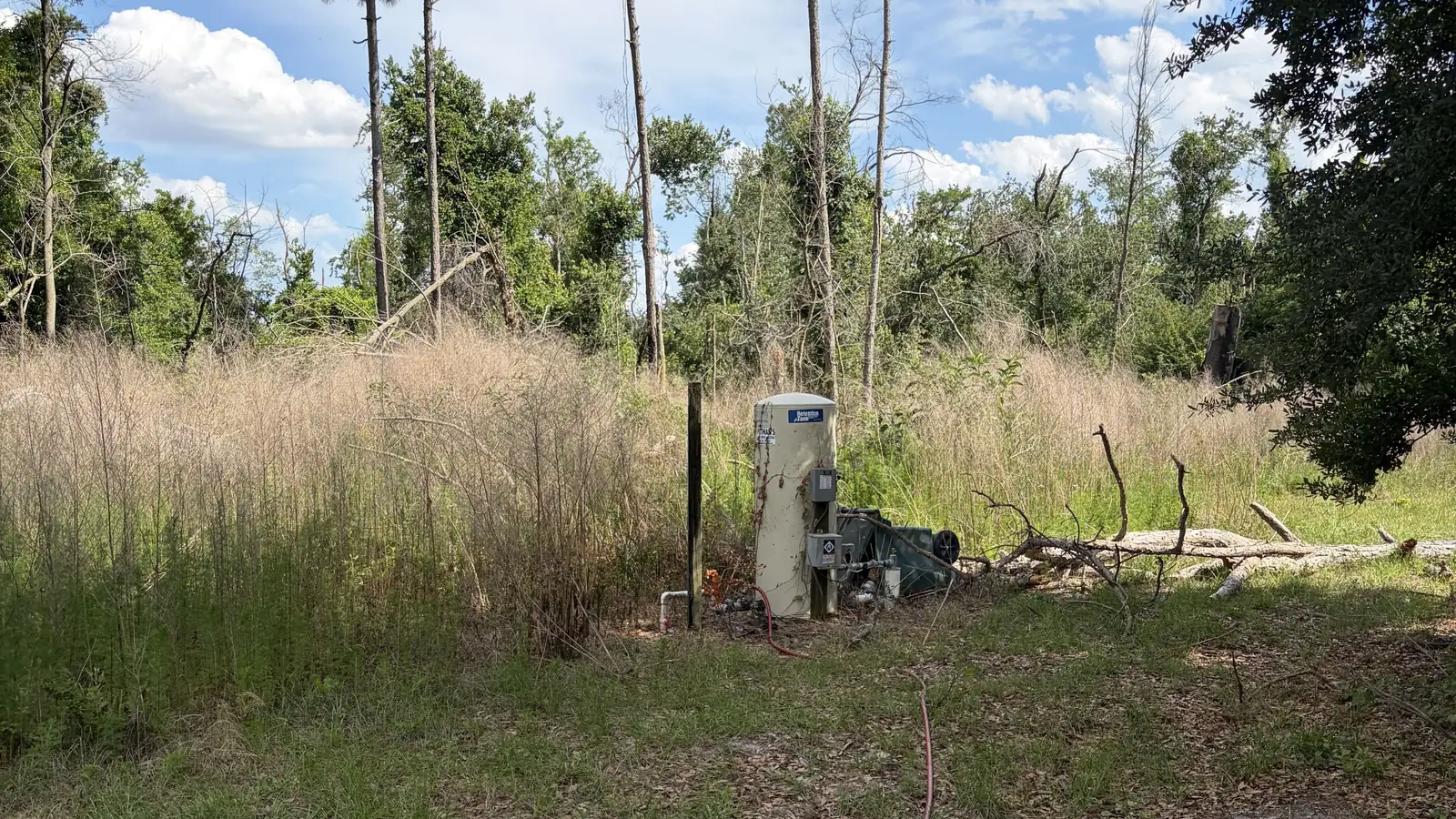
- Clear the site. The form asks if it is cleared. Land clearing opens up a grown-over lot so the evaluator can reach the drain field area.
- Sketch the site plan. Show the house, the well, the tank and drain field, the driveway and any sheds.
- Make access easy. Give directions, permission to enter, any gate code and a note on animals.
- Grade first, test after. When grading will change the drain field’s depth, the manual puts the soil evaluation after that work. Site preparation for a new house or mobile home covers the clearing, the rough grade and the pad.
- Keep fill off the drain field area. Fill is ruled out for conventional and chamber systems unless the county allows a controlled fill.
What makes a lot fail the soil evaluation, or need more?
- A high water table. Conventional and chamber systems need 24 inches between the trench bottom and the seasonal water table. An aerobic unit that treats to Class I quality needs 12 inches.
- Slow soil. On lots under 3 acres, soil slower than 90 minutes per inch rules out a conventional system. On 3 acres or more, the limit is 120 minutes per inch. Slower soil also needs more trench.
- A small lot. For a typical 3 or 4 bedroom home on a private well, the state’s recommended minimum is one acre. That is 43,560 square feet, 150 feet wide. The county can require more for slopes over 5 percent or perc rates over 45 minutes per inch. In a state groundwater recharge area, the manual calls for 110 to 150 percent of that minimum.
- Steep or wet ground. Slopes over 25 percent count as unsuitable unless a soil classifier’s study shows a design that works. Gullies and drainage ways are left out, and ground that floods often should not be used.
A lot that comes up short may still work with another spot, a bigger lot or another system type.
What happens after the county approves the lot?
Southern Grind Solutions installs new septic tanks and drain fields about 80 miles around Broxton, Georgia. The work covers the dig, setting the tank, the drain field lines, backfill and rough grade. Nothing gets covered until the county inspects the system and approves it in writing.
We look at the job and put the quote in writing. Our page on new septic tanks and drain fields around Broxton covers the work. Call or text (912) 381-6261.